I’m working on a memoir, which is the “culminating experience” of 4-years of study for an MFA in Creative Writing at SFSU. I’d also like to see the memoir published.
I won’t get into the purpose of writing the memoir here, because the meaning of it is a work in progress, along with the book itself.
However, you can get a sense of it from the following experience. I stumbled into this as I was writing about my childhood.
In 1963, I turned five years old. From that time until I was seven, I lived with my family in Enterprise, a rural village in Chaguanas, Trinidad, in the West Indies.
Recently–as part of my writer’s process to recall the details and mood of that time–I researched the top calypso hits of that time.
In 1963 the Mighty Sparrow reached the top of the charts with his satirical song “Dan is the Man in the Van.” As with many great calypso songs, the lyrics mix wry humor, social commentary, and some boasting.
As I listened to the recording on YouTube, I spun back to fragmentary memories of being five years old. In those memories, I am with my father or mother, and they are introducing themselves to someone, to a resident of this unfamiliar country where everyone looks different and talks strangely. The just-made acquaintance asks my name, the way one does of someone’s child.
On hearing me say “Danny,” they immediately exclaim “Dan is the Man in the Van!” And laugh uproariously. I think this happened more than once.
At five, confronted with this absolute nonsense, I had to go along. I did so warily. Eventually I was told there was a song, “Dan is the Man in the Van.” I must have heard it on the radio a few times back then, because I recognized it when I listened to it again this week.
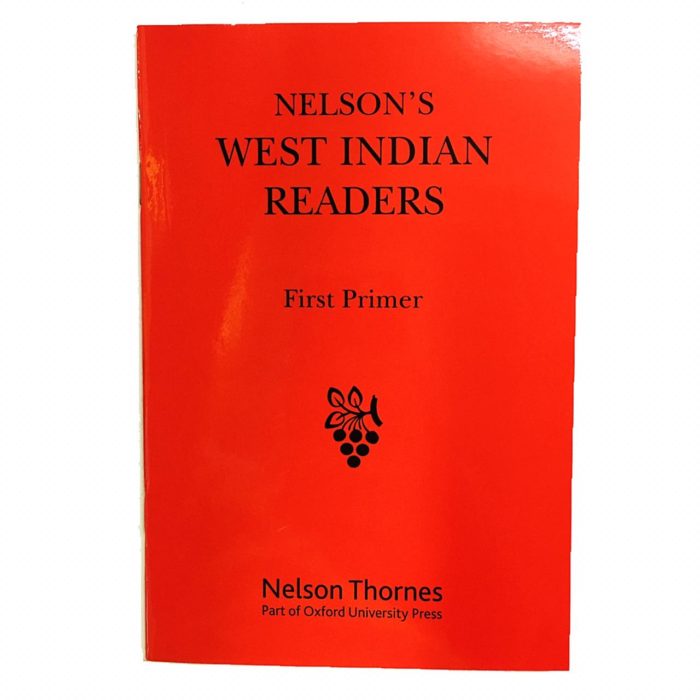
The song is the Mighty Sparrow’s spoof on the First Primer of Nelson’s West Indian Readers. The Readers, similar to “Dick and Jane,” were published by Oxford University Press, London, and used throughout Trinidad’s government schools.
The Mighty Sparrow’s calypso mocks both the childish idiocy of the lessons and the very adult idiocy of importing British-themed pedagogical materials into the colonies.
(Trinidad had won independence just one year before, under the leadership of Dr. Eric Williams. Williams was educated at Oxford; his thesis is the highly acclaimed history Capitalism and Slavery. His leadership was soon challenged by Trinidad’s Black Power Revolution, and Williams survived the challenge by endorsing Black Power.)
A few days ago I spent $8.95 on a copy of the First Primer. Opening it, it all seemed familiar. I must have used the First Primer when, at five, I attended first form at Las Lomas Government Primary School. I was the only white boy in the school. For some of the boys and girls my age, I may have been the first white person they’d ever met.
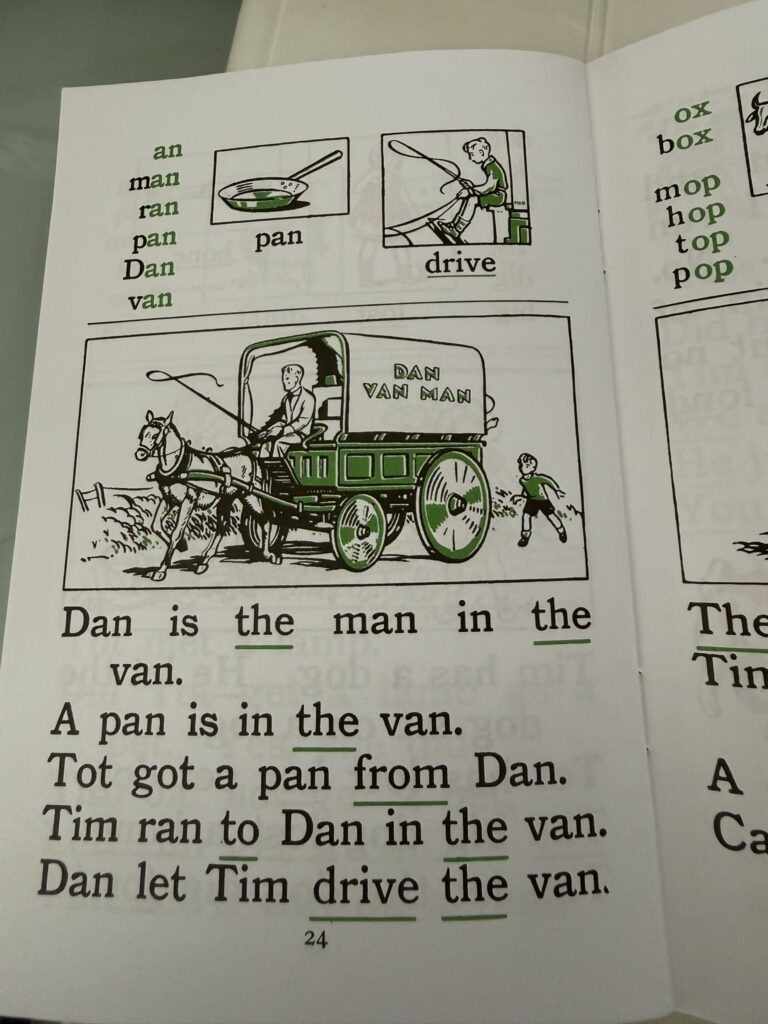
In the picture in the First Primer of Nelson’s West Indian Readers, Dan—the man in the van—is holding a whip over the back of a horse, which is pulling the wagon in which Dan sits. That is the “van” in the rhyme, not a motor van as we’d use the word now.
And Dan is white. In fact, all the people in all the illustrations in the First Primer of Nelson’s West Indian Readers are white.
So it is not surprising that the Mighty Sparrow would be making fun of the primers. In the song, he explains that he avoided idiocy by being too thick to learn the lessons. He sings:
How I happen to get some education
My friends, me ain’t know
All dey teach me is about Beer Rabbit
An’ Rumpelstilskin-o
Dey wanted to keep me down indeed
Dey try dey best, but didn’t succeed
You see, meh head was duncee
An’ up to now ah cyah read!
Dey beat me like ah dog to learn that in school
If me head was bright ah woulda be a damn fool!
With Dan, is de man, in de van
What am I to make of this childhood story?
Fifty years later, I was father to a 5-year old. I think 5-year-olds need to feel that they are accepted as an equal member of the group, so that they can build their sense of self through free interactions with peers.
And I’m not the man in the van. Never wanted to be, and never was.